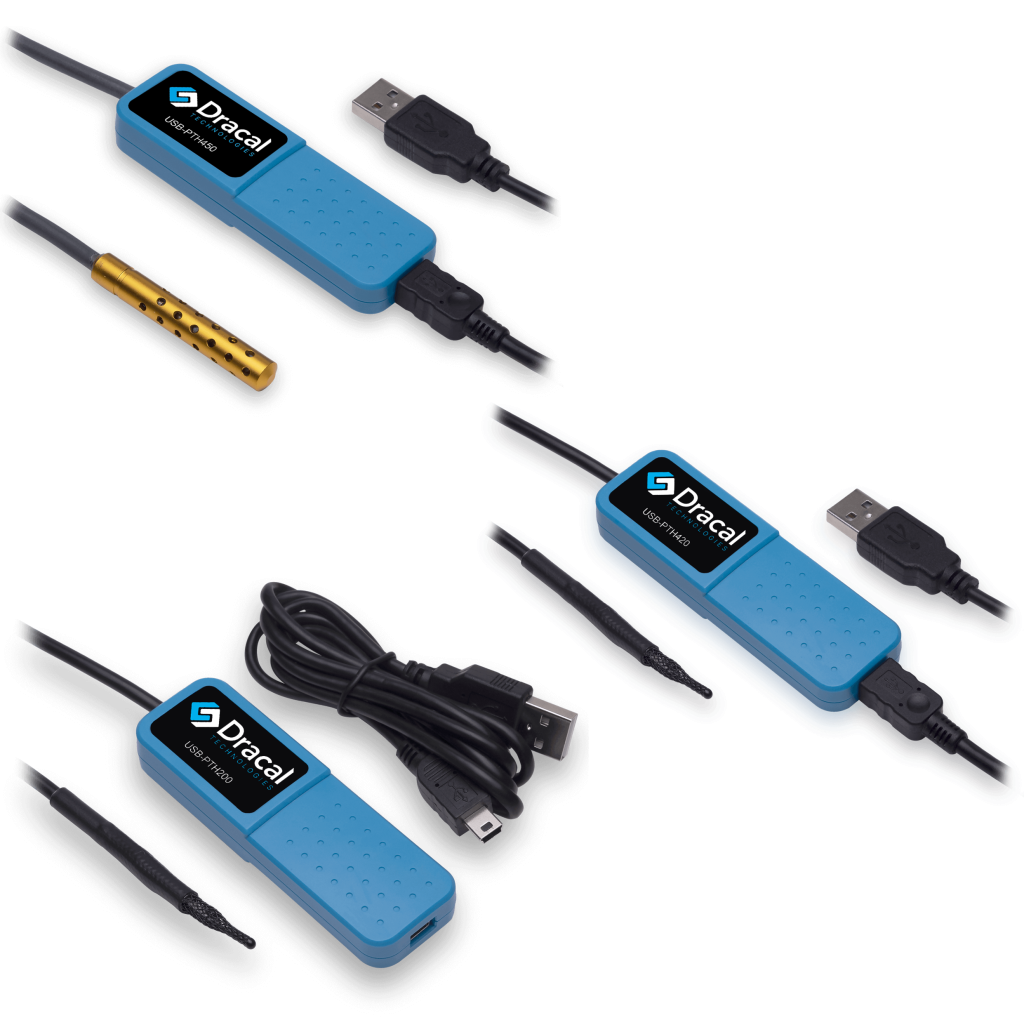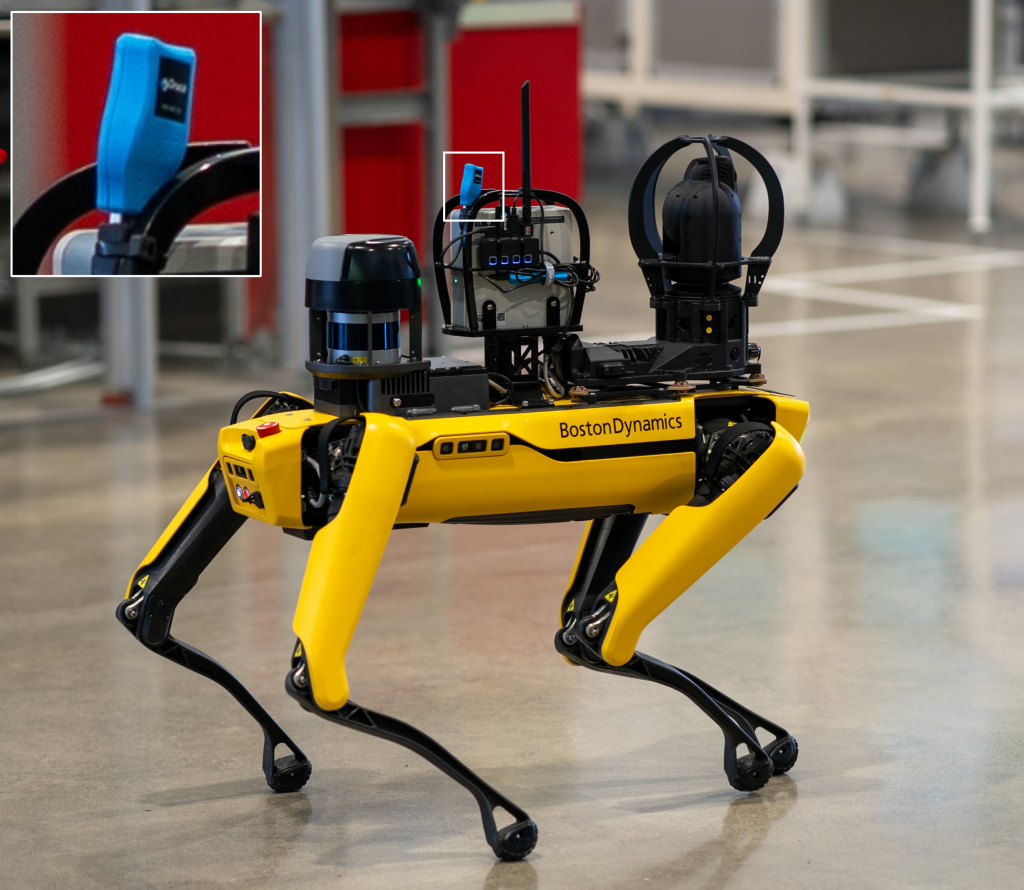
See what your design is experiencing. Right now. No setup required.
Plug a Dracal USB sensor into your laptop. In 30 seconds you have a live reading, a graph, and a logged CSV: no code, no configuration. When you’re ready to automate, the same sensor integrates into Python, LabVIEW, C#, or MATLAB in under an hour.
Engineering timelines are compressing. Design reviews happen earlier. Prototypes are expected to produce documented data before lab budgets are finalized. But the tools that exist were built for different contexts entirely, and neither fits.
You’ve seen these options before:
ALTERNATIVE A
High-end instruments
$5,000 to $10,000 per measurement point. Not designed for changing setups.
- Proprietary data interface: integrating it into your code is a separate project
- Rigid form factor: can’t follow a measurement point that moves week to week
- Capital is committed before the design is final
ALTERNATIVE B
Build it yourself
Full control over the code. But signal conditioning, calibration, and firmware each take longer than scoped.
- Calibration requires a reference instrument and a protocol not in the original timeline
- LabVIEW license may not get approved; raw platform gives you control but no calibration
- Two days planned, three weeks typical
Environmental sensing for engineering work should not require a procurement budget or a firmware sprint.
We work with RF engineers, test technicians, physicists, and materials scientists. The sensor is never what they are building. It is what lets them understand and document what they are building.





15+
50+
3-yr
Three steps to precision environmental data
Pick your measurement, protection level, and options (-CAL for recalibration, ISO 17025 certificate for traceability).
Open DracalView (free) for a live reading and CSV export in 30 seconds. When you need to automate, the same sensor integrates via CLI, REST API or MQTT, with copy-paste examples in 10+ languages.
Add new sensor type without rewriting your integration. Add measurement points at any stage. With -CAL models, recalibrate yourself easily or send it to any calibration lab supporting USB connexion.
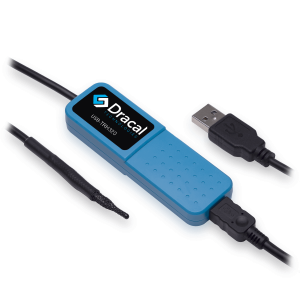
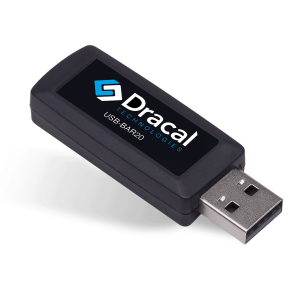
How the options compare
With Dracal sensors, your team measures, iterates, and documents in the same sprint. The design work does not wait for the measurement setup.
How do you want to read your data?
Both paths use the same instrument hardware, the same calibration, and the same 3-year warranty. Most engineers start with DracalView, then add the CLI or APIs when they automate.
DracalView: live data in 30 seconds
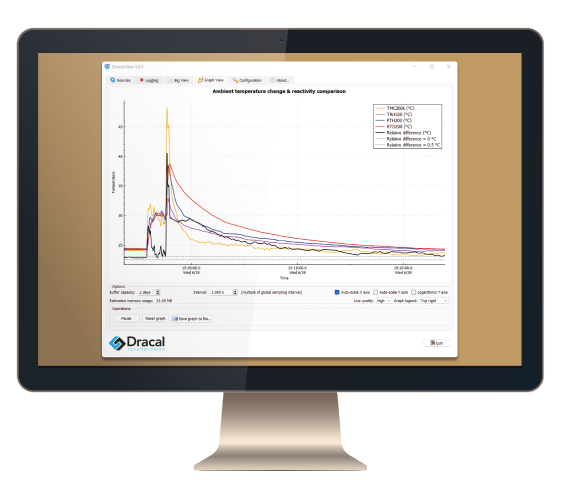
Free · included with every instrument
TIME TO FIRST READING
30 seconds.
CLI, APIs, COM: integrate into your code
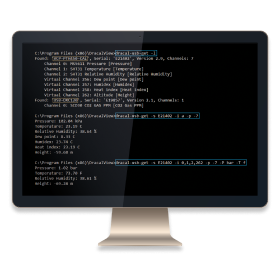
Free · included with every instrument
Or the Virtual COM product option:
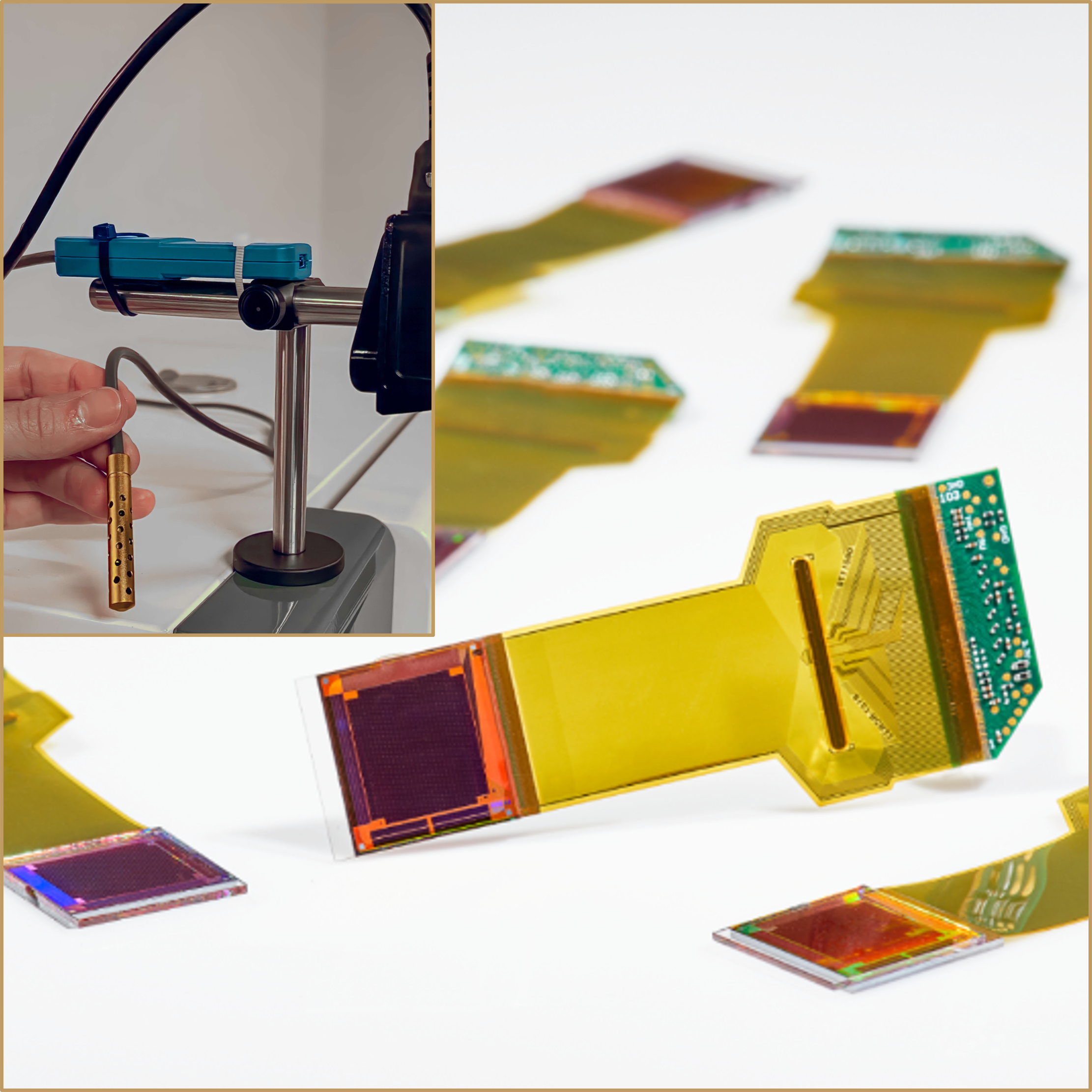
Automating environmental data gathering with Lumotive
“When we found Dracal, everything we needed was there. It was an out-of-the-box solution, with good documentation and online support, an API, and it was clear that we could communicate easily with the sensors under Windows and Linux.
The sensors were physically robust and had not only the temperature range we needed, but also support for higher temperature ranges if required. After testing them, we decided to replace all testing sitewide at Lumotive with Dracal sensors.“
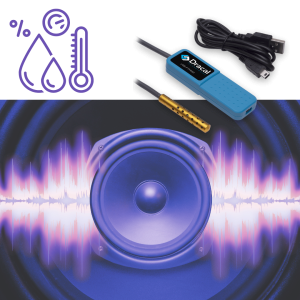
Acquire data for audio product development in less than 5 minutes
“I’ve used Dracal products in the past, and bought a few PTH450 here to show the team how easy it is to set up and use vs other options like Omega, NI, etc. I did a demo at a meeting where someone was able to collect data in < 5 mins using some short instructions on install and commands. […]
Dracal tools for automation (via CMD!) makes the products easy to use across setups (R&D, manufacturing) without worries about cost or complex installs for things like C, python, VB, matlab, etc.”
Controlling environmental conditions with high precision
“We are working in the field of ultracold atomic physics and Bose-Einstein condensates. Previously, we used Omega sensors but were dissatisfied with their computer interface and high prices. Dracal’s products fit our needs perfectly.
Our needs are not unique; we conduct straightforward experiments, but many of them are sensitive to environmental parameters. We even built our own datalogger in LabVIEW. Dracal’s solutions have proven to be an excellent fit for our requirements.“