Automating temperature logging on an EV battery test bench
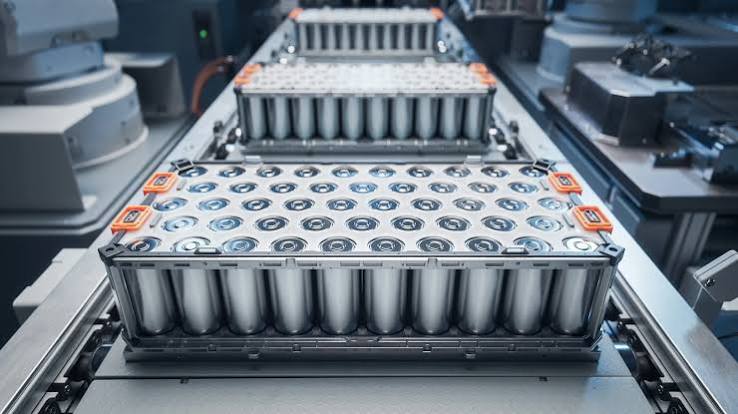
Production and automation on battery test benches
Electric vehicle battery manufacturing
Who is this use case for?
Thermal and test engineers at electric vehicle battery manufacturers who record temperature by hand at each test station and want to automate that capture. They need a calibrated probe with tighter accuracy and resolution than a general purpose sensor, a geometry that fits a compact fixture, and a reading that drops into an existing logging routine.
What is this about?
Selection of a calibrated Dracal RTD to USB chain for an electric vehicle battery manufacturer’s test stations. The goal is to automate temperature capture and replace manual thermometer reads. It resolves human error in the test record and the rejection of a previous probe that missed the team’s accuracy, resolution and geometry requirements.
Customer Story
Feedback from the thermal design engineer responsible for test automation at a manufacturer of electric vehicle battery systems.
″We design electric vehicle battery systems and the packs that go with them, and a large part of that work is testing. Every test needs a temperature reading, and until now our team has been taking those readings by hand, one thermometer at a time at each station, and writing the value down. It works, but it is slow and it leaves room for human error in the record, and with the number of tests we run I wanted to automate it.
I am a thermal design engineer, and I had already done most of the work on our side. I wrote the automation in Python and had everything prepared. What I was missing was the sensor. I did not need a new system, I needed the right probe that I could bring into the code I had already written.
We had been using a probe from ThermoWorks, but it did not meet our precision and resolution requirements, so I could not rely on it for this. The geometry was a problem too. The probe was too long for the space we have at the stations, and I needed something with a smaller, shorter geometry that would actually fit the fixture.
What worked for us with Dracal was a calibrated RTD reader I could trust. I ordered the calibrated USB RTD adapter with a PT100 probe and a three-point temperature certificate, so the accuracy and resolution were where they needed to be, unlike the probe we had before. For thermal validation the calibrated reading is the part that matters most, because I have to be able to trust the number.
Our plan is to put a sensor at every test station and configure the capture automatically, so the temperature is logged the same way every time with no one writing anything down. I evaluated it first against what we actually need, and then we came back and ordered more for the stations. I have also recommended your product to our production team, in case they want to upgrade their own testing setup.″
The challenge
Automating temperature capture across the test stations of an electric vehicle battery manufacturer, replacing manual thermometer readings, while meeting two hard requirements: accuracy and resolution better than a previously used probe that fell short, and a compact probe geometry that fits the test fixture. The sensor also had to read into an existing Python routine.
The solution
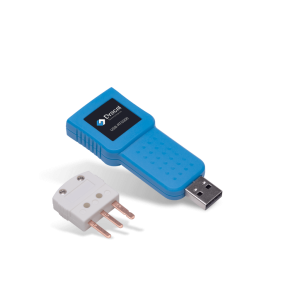
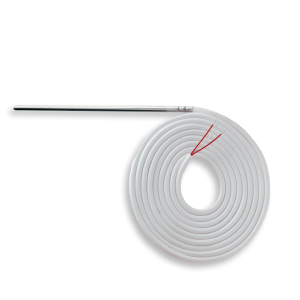
The calibrated Dracal USB-RTD300-CAL adapter reads an RTD-PT100 probe and was ordered with an NT3WT three-point certificate, delivering the accuracy and resolution the earlier probe lacked. The team reads the sensor with Dracal’s command line tools and pulls the value into its existing Python routine, so temperature is captured automatically at each station in place of the manual thermometer.

Prerequisites and limitations
To implement this solution, the following prerequisites and limitations are considered:
- A host system with an existing temperature logging routine.
- The calibration certificate (NT3WT) and the calibratable adapter option (-CAL option) are ordered as part of the purchase.
- The chain measures temperature only. A separate sensor is required for any other measurand.
- Probe geometry matters in a compact test fixture.
Implementation
- Order the USB-RTD300-CAL adapter with an RTD-PT100 probe and the NT3WT three-point certificate. All three are available on the RTD300 ordering page.
- Confirm the probe geometry fits the test fixture, or connect an own RTD probe where a specific length or diameter is required.
- Connect the adapter over USB and confirm the reading in DracalView.
- Read the sensor from the existing Python code using the Dracal command line tools or API.
- For an integration with no Dracal software dependency, the VCP variant of the adapter presents a virtual serial COM port that can be read directly from any language. See the VCP setup guide and code examples.
- Validate the readings against the accuracy requirement before rolling the sensor out across the test stations.
State after implementation
The calibrated USB-RTD300-CAL chain is selected and on order for the battery test stations, and the team’s Python routine is prepared to capture the reading automatically at each station in place of a manual thermometer read. Following an initial evaluation, a further order was placed for additional stations, and the engineer recommended the chain internally to the production group for their own test setup.
PRODUCTS YOU CAN TRUST
Approved by engineers, scientists and researchers around the world.
Thousands of companies trust our products worldwide:












Not sure if your project will benefit from Dracal’s solution?
Contact us, tell us about your project, and we’ll quickly determine if there’s a fit.
"*" indicates required fields