Bringing in-house calibrated temperature measurement to a medical device manufacturing process

Calibration and metrology in quality control
Medical device manufacturing
Who is this use case for?
Medical device manufacturers who run temperature controlled tests and need an accurate USB temperature reference that they can calibrate in-house. This product and application fits teams that have specific temperature accuracy requirements, have had previous USB converters for Pt100 units discontinued, have requirements to control their own calibration instead of returning probes to a vendor, need a compact adapter that fits an existing test fixture, or need short delivery times.
What is this about?
Replacement of a discontinued USB converter for Pt100 sensors with the Dracal VCP-RTD300-CAL in a medical device manufacturer’s temperature controlled test. The adapter reads measurements from the team’s own Pt100 probe over USB. The change to the Dracal VCP-RTD300-CAL restored supply after the previous vendor made its line obsolete. It also allowed the team to calibrate their system in-house, allowing them to control their own workflow, as they roll out the setup across their manufacturing sites.
Customer Story
Feedback from the engineering lead and the procurement lead at a global medical device manufacturer:
The challenge
“We require the ability to monitor the temperature of a manufacturing testing process to ensure our products meet performance requirements for use within the human body. To do that, we continuously monitor the system’s fluid temperature, of which the data is used to ensure validity and accuracy of the test. Due to our system architecture, the fluid temperature must be measured by a Pt100 probe via a USB interface. We had previously been using USB Pt100 converters from a competitor for 10+ years prior to working with Dracal.
We were informed by the leadership at a competitor that their USB Pt100 line was being obsoleted, with no prior warning or alternative solution provided. We were fortunate to secure a supply prior to obsoletion, however this left us with no option for the future. In addition, their lead time on probes and converters was four to six months, and recalibrating a probe with the vendor cost almost as much as buying a new one. In these instances, we often chose to discard the probes and purchase new, which we felt was not sustainable and a waste of materials.”
The solution
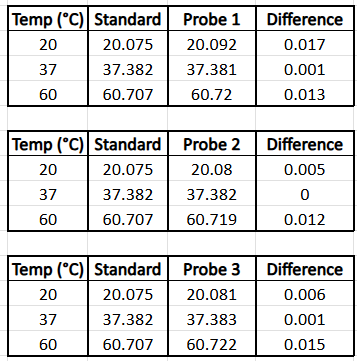
“We purchased one VCP-RTD300-CAL unit to test, and within one hour, we were able to connect it to Pt100 probes, calibrate it, switch the mode from VCP to USB and vice-versa, and view output readings*. This proves how intuitive the software (DracalView) was to use and how simple the unit is to integrate with our Pt100 probes.
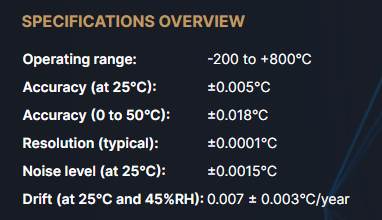
The product ticked all our boxes. We had three critical criteria: the accuracy of the probe for our 4 to 1 ratio, the dimensions to fit within our system, and USB connectivity. We talked about five significant digits and it hit the requirement. We do not use a Dracal Pt100, but one from Process Parameters. We plug our own three wire probe into the RTD300 and get the USB out, so it acts as our analog to digital converter.
What makes the Dracal RTD reader unique on the market is its ability to compensate for the inaccuracies of a PT100 probe, thereby maximizing the accuracy these sensors can provide.
To get our testing platform ready for use quickly, we leveraged Dracal’s in-house validation documentation. Ariane (Dracal’s CEO) provided expert advice and information that allowed us to condense a workload that would typically take three months, into three weeks.
Specifically, we validated the software and calibration method using Dracal’s tools, as well as utilised both the virtual COM port (VCP) and USB communications for system integration and calibration modes respectively.”
* The unit measures temperature only and is not a data logger. Readings must be captured in real time by the host software or by the integration code.
Instruments used for this project:
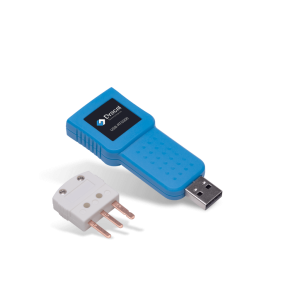
Prerequisites and limitations
To implement this solution, the following prerequisites and limitations are considered:
-
A host computer with a free USB port and the Dracal software or command-line tools installed. DracalView for Windows communicates over USB, so a unit left in VCP mode will not be recognized by DracalView. See the VCP Getting Started Guide for Windows.
-
The RTD300 is an adapter, not a complete probe. A compatible 2 or 3 wire Pt100 probe must be supplied and wired into the 3-pin connector, and the adapter’s stated accuracy applies to the adapter only, excluding the probe. See the product page.
-
The -CAL option provides the user calibration mechanism used here for in-house calibration. A NIST traceable ISO/IEC 17025 certificate is a separate service and was not part of this in-house workflow.
-
The VCP- option is required to integrate over a virtual COM port. As of July 2026 VCP units ship in VCP mode by default, so switch to USB mode to calibrate with DracalView, then back to VCP mode for integration. See VCP, what and why.
Implementation
“Pt100 temperature sensors were installed at the top and bottom of the system to continuously monitor the fluid temperature and collect data using two RTD300 analog-to-digital converters.”
State after implementation
“We now have one site running in production with Dracal’s USB devices, with a rollout plan active for our remaining sites. The units are more cost-effective than than those from our previous supplier, and because we recalibrate in-house, our probes will last much longer.”
PRODUCTS YOU CAN TRUST
Approved by engineers, scientists and researchers around the world.
Thousands of companies trust our products worldwide:












Not sure if your project will benefit from Dracal’s solution?
Contact us, tell us about your project, and we’ll quickly determine if there’s a fit.
"*" indicates required fields